If you serve on a booster club board, you already know the feeling. It’s fundraising season again, and your inbox is flooded with options. Candy bars, cookie dough, discount cards, car washes, fun runs, auction nights — the list never ends. Every company promises the best returns. Every PTA Facebook group swears by a different approach. And yet, year after year, your booster club ends up with roughly the same results: a lot of effort for a payout that barely covers the next equipment purchase.
Here’s the uncomfortable truth. The problem isn’t a shortage of fundraising ideas. The problem is that booster clubs are drowning in options but starving for results. Adding another idea to the list doesn’t fix what’s broken. What does fix it is choosing the right partner to run your fundraiser with you — not just sell you something to sell.
This post isn’t another list of fundraising ideas. It’s a decision framework. By the end, you’ll know exactly what to look for in a fundraising partner, what red flags to avoid, and how the right partner can take your booster club from grinding through fundraisers to growing sustainable revenue with a fraction of the effort.
The Real Problem: More Ideas Aren’t the Answer
Most booster clubs cycle through fundraisers the same way families cycle through diets. They try something new each season, get excited for the first two weeks, lose momentum, and end up disappointed with the results. Then they start the whole cycle over again.
The cycle persists because the fundraising industry has trained booster clubs to think the solution is always a different product or a different tactic. Try gift wrapping this year. Try gourmet popcorn next year. Try a color run the year after that. Each idea sounds promising in isolation, but none of them address the structural problems that make booster club fundraising so exhausting in the first place.
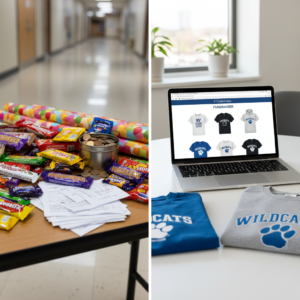
Those structural problems are consistent across schools and programs. Booster club volunteers — who are almost always parents already stretched thin — end up managing inventory, collecting money, tracking orders, handling returns, and delivering products. They’re essentially running a small retail operation on nights and weekends for free. The financial risk sits entirely on the booster club. If sales underperform, the club eats the cost. The time commitment is enormous. The return on that time is often disappointing.
A new fundraising idea layered on top of the same broken structure just creates a new flavor of the same frustration. What booster clubs actually need is a different structure entirely. That’s where a fundraising partner comes in.
What a Fundraising Partner Actually Is

Not every company that helps you raise money is a partner. Understanding the difference between a vendor, a platform, and a partner is the first step to making a smarter choice for your booster club.
A vendor sells you something. You buy cases of candy, rolls of wrapping paper, or boxes of discount cards at wholesale prices. The vendor gets paid whether your fundraiser succeeds or not. The financial risk is all yours. If half the candy goes unsold, the vendor already has your money. Vendors are transactional by nature. They fulfill an order and move on.
A platform gives you tools. Online crowdfunding sites, donation page builders, and peer-to-peer fundraising platforms fall into this category. They provide the technology, but you’re on your own for strategy, product, design, promotion, and fulfillment. Platforms are useful, but they’re infrastructure — not collaborators.
A fundraising partner shares the risk and handles the logistics. A true partner provides products your community actually wants, manages production and shipping, offers design support, and earns money only when you do. The partner’s success is directly tied to yours. If your fundraiser flops, the partner feels it too. That alignment of incentives is what makes a partnership fundamentally different from buying from a vendor or using a platform.
Think of it this way. A vendor hands you a box and wishes you luck. A platform hands you a toolbox and tells you to figure it out. A partner stands next to you and builds something together.
5 Criteria for Evaluating a Fundraising Partner
When you’re evaluating a potential fundraising partner, every detail matters. But five criteria separate genuine partners from companies that just call themselves one. Here’s what to look for and what to ask.
1. Do They Take On Financial Risk, or Do You?
This is the single most important question. A genuine fundraising partner should require zero upfront cost from your booster club. If a company asks you to pre-purchase inventory, pay setup fees, or commit to a minimum order before a single item sells, they’re not partnering with you — they’re selling to you.
The zero-upfront-cost model protects your booster club in the most critical way. You cannot lose money on a fundraiser you never paid to start. If the campaign underperforms, you simply earned less than you hoped. You didn’t write a check that you can’t get back.
When evaluating a partner, ask directly: “What do we pay before our first sale?” If the answer is anything other than nothing, keep looking.
2. Do They Handle Production and Shipping, or Do You?
One of the biggest hidden costs in booster club fundraising is volunteer time. Every hour a parent spends sorting t-shirts, stuffing envelopes, or delivering orders is an hour they’re not spending with their family — and an hour closer to burnout.
A real partner handles the entire fulfillment process. Products are manufactured, packaged, and shipped directly to supporters. Your booster club never touches inventory. You never make a trip to the post office. You never field a text from a frustrated parent asking where their order is.
This isn’t a nice-to-have. It’s the entire point of a partnership. If your volunteers are still doing fulfillment work, the company you’re working with is a supplier, not a partner.
Ask: “Who handles production, packaging, and shipping?” If the answer involves your volunteers in any way, that’s a vendor relationship dressed up as a partnership.
3. What’s the Commission Structure, and Is It Transparent?
Commission structures in fundraising are notoriously murky. Some companies advertise generous percentages but bury fees in fine print. Others offer escalating commission rates that sound impressive but require sales volumes your club has never hit.
A trustworthy partner lays out the commission structure clearly. You should know exactly what percentage of each sale goes to your booster club before you sign anything. No setup fees deducted from earnings. No processing charges that shrink your cut. No complex tier systems that sound great on paper but deliver less in practice.
Industry standard for merchandise-based fundraising partnerships falls in the 10–20% range. If a company promises 40% or 50% commission, scrutinize the fine print. Those higher rates almost always come with upfront inventory purchases or other costs that effectively reduce your real return. The RaiseRight booster club resource also emphasizes the importance of understanding true net earnings before committing.
Ask: “What exactly does our booster club earn per sale, after all fees?” If they can’t give you a straight number, that’s a problem.
4. How Fast Is Fulfillment?
Speed matters more than most booster clubs realize. When a parent orders a hoodie on Monday, they expect it by next Monday — not next month. Fulfillment timelines of four to six weeks were normal a decade ago. Today, they’re a dealbreaker.
Slow fulfillment kills repeat business. If someone’s first experience with your fundraiser involves waiting five weeks for a t-shirt, they won’t order again. They’ll also tell other parents about the wait, which depresses future sales before they even start.
A strong fundraising partner fulfills orders in five to seven business days. That timeline matches what people expect from online shopping and keeps enthusiasm high throughout the campaign.
Ask: “What’s your average fulfillment time from order to delivery?” Then verify that answer with references or reviews. If they say “two to three weeks,” keep shopping.
5. Do They Provide Design Support, or Are You on Your Own?
Your booster club probably doesn’t have a graphic designer on the board. Most don’t. That means design support from your fundraising partner isn’t a luxury — it’s essential.
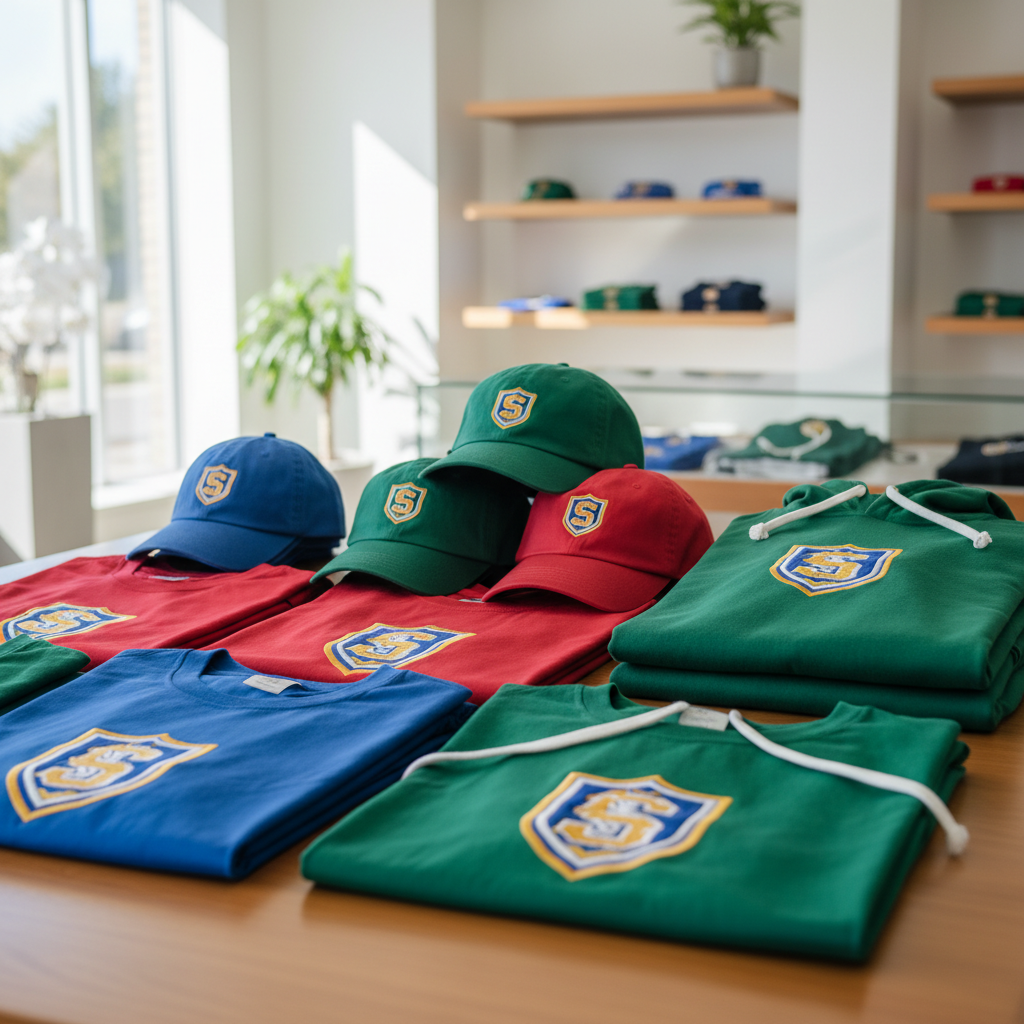
Some companies give you a template and wish you luck. Others provide custom design services that create merchandise your community actually wants to wear. The difference shows up in sales. Professional designs outperform DIY graphics every time, and they elevate your school’s brand in the process.
A good partner will work with your existing logos, colors, and brand guidelines to create products that look sharp and feel authentic. They should offer multiple design concepts, accept revisions, and deliver print-ready files without charging extra.
Ask: “Do you provide design support, and is it included in the partnership?” If design costs extra, factor that into your real commission rate.
Red Flags When Evaluating Partners
Even companies that check some of the boxes above can still be wrong for your booster club. Watch for these warning signs.
- Hidden fees. Setup fees, monthly platform fees, transaction processing fees, design fees — if you’re discovering costs after you’ve already committed, you’re dealing with the wrong partner. A transparent partner discloses every cost upfront before you sign anything.
- Minimum order requirements. If a partner requires your booster club to guarantee a minimum number of sales or a minimum dollar amount, they’re shifting risk back onto you. Minimum orders make sense for wholesale vendors. They don’t make sense for partnerships.
- Slow or vague fulfillment timelines. “We ship within 4–6 weeks” is code for “we produce in batches and you wait until the batch is full.” Your supporters deserve better, and your fundraiser’s reputation depends on it.
- No design support. If the partner expects you to upload print-ready files and provides no creative assistance, they’re a print-on-demand service, not a fundraising partner. Your booster club deserves collaborative design help.
- Poor communication. If emails go unanswered for days during the sales process, imagine what happens when something goes wrong with an order. Responsiveness before you commit predicts responsiveness after you commit.
- No track record with schools. A company that primarily serves corporate clients or one-off events may not understand the unique dynamics of school communities — the seasonality, the volunteer structure, the importance of school brand compliance, and the sensitivity around pricing.
The Partnership Model in Action
Understanding the criteria is one thing. Seeing how a partnership actually works from start to finish is another. Here’s what the process looks like when your booster club works with a true fundraising partner like Varsity Vault.
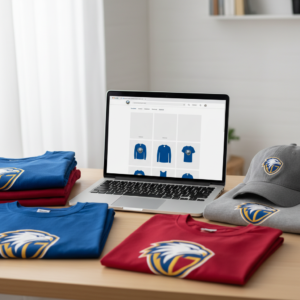
Step 1: Setup. You provide your school logos, brand colors, and any design preferences. Your partner creates a custom online store tailored to your school community. This takes days, not weeks. No contracts to sign. No fees to pay.
Step 2: Design. Your partner’s design team creates product concepts featuring your branding. You review, request changes, and approve. This collaborative process ensures the merchandise reflects your school’s identity — not a generic template.
Step 3: Launch. Your store goes live with a unique URL. Your booster club shares the link through every channel available — email, social media, text chains, school newsletters, game-day announcements. The partner provides promotional materials and guidance to help you maximize reach.
Step 4: Sales and Fulfillment. Supporters browse and purchase directly from the store. Every order is produced and shipped individually within five to seven business days. Your booster club never touches a single product. No sorting sessions in someone’s garage. No delivery routes on Saturday morning.
Step 5: Earnings. Your booster club receives a commission — typically 10–20% — on every sale. Payouts are transparent and predictable. You know exactly what you’ve earned at any point during the campaign.
Step 6: Scale. The store stays live beyond any single campaign. Alumni find it through search. Grandparents order holiday gifts. The store becomes a year-round revenue stream rather than a one-time event. Need bulk orders for the team or an event? Your partner handles those too through their bulk order process.
That’s the entire model. Your booster club focuses on what it does best — building community and spreading the word. The partner handles everything else. You can see the full breakdown of how Varsity Vault works on their site.
Why the Right Partner Makes Your Job Easier — Not Harder
The best fundraising partner doesn’t just help you raise more money. They make the entire experience less painful for everyone involved.
For booster club officers, a partnership eliminates the most stressful parts of fundraising. No more guessing how many items to order. No more storing unsold inventory in a board member’s spare bedroom. No more chasing down parents who haven’t paid. No more weekend delivery drives. The administrative burden drops to near zero.
For parent volunteers, a partnership means they can contribute by simply sharing a link instead of coordinating logistics. That’s the difference between “Can you spend your Saturday handing out orders in the gym?” and “Can you share this link on your social media?” One asks for hours. The other asks for seconds. Guess which one gets more participation. For more on this, see 7 Ways to Increase Parent Participation in School Fundraisers.
For supporters, a partnership means a professional purchasing experience. They browse a well-designed store, buy what they want, and receive it quickly. They’re not filling out paper order forms or handing cash to a student at school. They’re shopping the way they shop for everything else — online, on their own time.
For your school community, a partnership means sustainable revenue. Instead of starting from zero every fundraising season, you’re building on what came before. Each campaign adds new customers and new momentum. The store grows. The earnings compound. And the annual fundraising panic becomes a thing of the past.
Varsity Vault built its model around exactly this kind of partnership. Schools and booster clubs get custom merchandise stores with no upfront costs, no inventory risk, and fast fulfillment. They handle design, production, and shipping while your club focuses on community engagement. You can also explore fundraising compliance guidelines for athletic directors to make sure your program stays on the right side of state and district rules.
For broader context on booster club fundraising strategies, Funds2Orgs offers a comprehensive roundup of booster club fundraising ideas, and Big Fundraising Ideas covers parent and community engagement tactics that complement a partnership model.
The bottom line is simple. Stop looking for the next great fundraising idea. Start looking for a partner who’ll make every idea you run work better — with less effort, less risk, and better results for your booster club and the programs you support.
Your community deserves a fundraiser that works as hard as they do. The right partner makes that possible.
Frequently Asked Questions

What is a booster club fundraising partner?
A fundraising partner is a company that shares the risk and handles logistics for your fundraiser — unlike a vendor who simply sells you product, or a platform that only provides technology. A true partner provides products, manages production and shipping, offers design support, and earns money only when your booster club does. Their success is directly tied to yours.
Should a booster club pay upfront costs for a fundraiser?
No. A genuine fundraising partner should require zero upfront cost. If a company asks you to pre-purchase inventory, pay setup fees, or commit to a minimum order before a single item sells, they’re operating as a vendor — not a partner. The zero-upfront-cost model ensures your booster club cannot lose money on a fundraiser it never paid to start.
What commission rate should a booster club expect from a merch fundraiser?
Industry standard for merchandise-based fundraising partnerships falls in the 10–20% range. If a company promises 40% or 50% commission, scrutinize the fine print — those higher rates almost always come with upfront inventory purchases or hidden fees that reduce your real return. The key is transparency: you should know exactly what you earn per sale after all fees.
How fast should a fundraising partner fulfill orders?
A strong fundraising partner fulfills orders in 5–7 business days. This matches what consumers expect from online shopping and keeps enthusiasm high throughout the campaign. Fulfillment timelines of 4–6 weeks were acceptable a decade ago, but today they damage your fundraiser’s reputation and kill repeat business.
What red flags should booster clubs watch for when choosing a fundraising partner?
Watch for hidden fees, minimum order requirements, slow or vague fulfillment timelines, no design support, poor communication, and no track record with schools. If a company can’t disclose all costs upfront, requires minimum sales guarantees, ships in 4+ weeks, or leaves design entirely on you, they’re likely a vendor or platform — not a true partner.
Can a booster club run a fundraiser with no volunteers handling inventory?
Yes — that’s exactly what a true fundraising partner provides. With a partnership model like Varsity Vault’s, every order is produced and shipped directly to supporters. Your booster club never sorts, stores, or delivers products. Volunteers contribute by sharing a link, not by running logistics. This is the core difference between a partner and a vendor.